

Creatine for Women: What Actually Changes When You Take 5g a Day
No bro-science, no “bulking” panic—just a clearer look at what creatine does, what it does not do, and how to build a routine around it.
Creatine has spent decades being marketed like a “gym bro” supplement. That framing is finally catching up with the evidence—and women are asking a better question: what does creatine actually do, and what should I realistically expect from 5 grams a day?
If you have ever avoided creatine because you were worried about getting “too bulky,” gaining fat, or looking puffy, you are not alone. Those fears usually come from mixing up three very different things: muscle, water stored inside muscle cells, and body fat. Creatine does not magically turn one into another.
Its basic job is much less dramatic: creatine helps replenish phosphocreatine, which supports the rapid regeneration of ATP during short, high-intensity efforts. In real life, that can matter during sets of squats, hip thrusts, sprints, jumps, or any training where repeated high-output effort is the point.
Three creatine myths women can retire
Muscle growth requires a training stimulus, enough food, enough protein and time. Creatine may help training quality; it does not decide your physique for you.
Early scale changes can reflect increased water stored with creatine in muscle. That is different from gaining body fat.
Creatine works by maintaining muscle creatine stores. Daily consistency generally matters more than a perfect pre-workout clock.
Why 5 grams became the simple answer
A large part of creatine’s popularity comes from how uncomplicated the basic protocol can be. Many research protocols use creatine monohydrate daily, and 3–5 grams per day is a common maintenance range in sports-nutrition practice. Some people use a short “loading” phase; others simply take a steady daily dose and allow muscle stores to rise more gradually.
Female-specific research is smaller than the overall creatine literature, which is worth acknowledging. A 2025 systematic review focused on active females found that the evidence is still mixed across performance outcomes, while broader resistance-training meta-analyses continue to support strength benefits from creatine overall. That is a good example of what responsible wellness content should sound like: promising and useful, without pretending every subgroup has identical data.
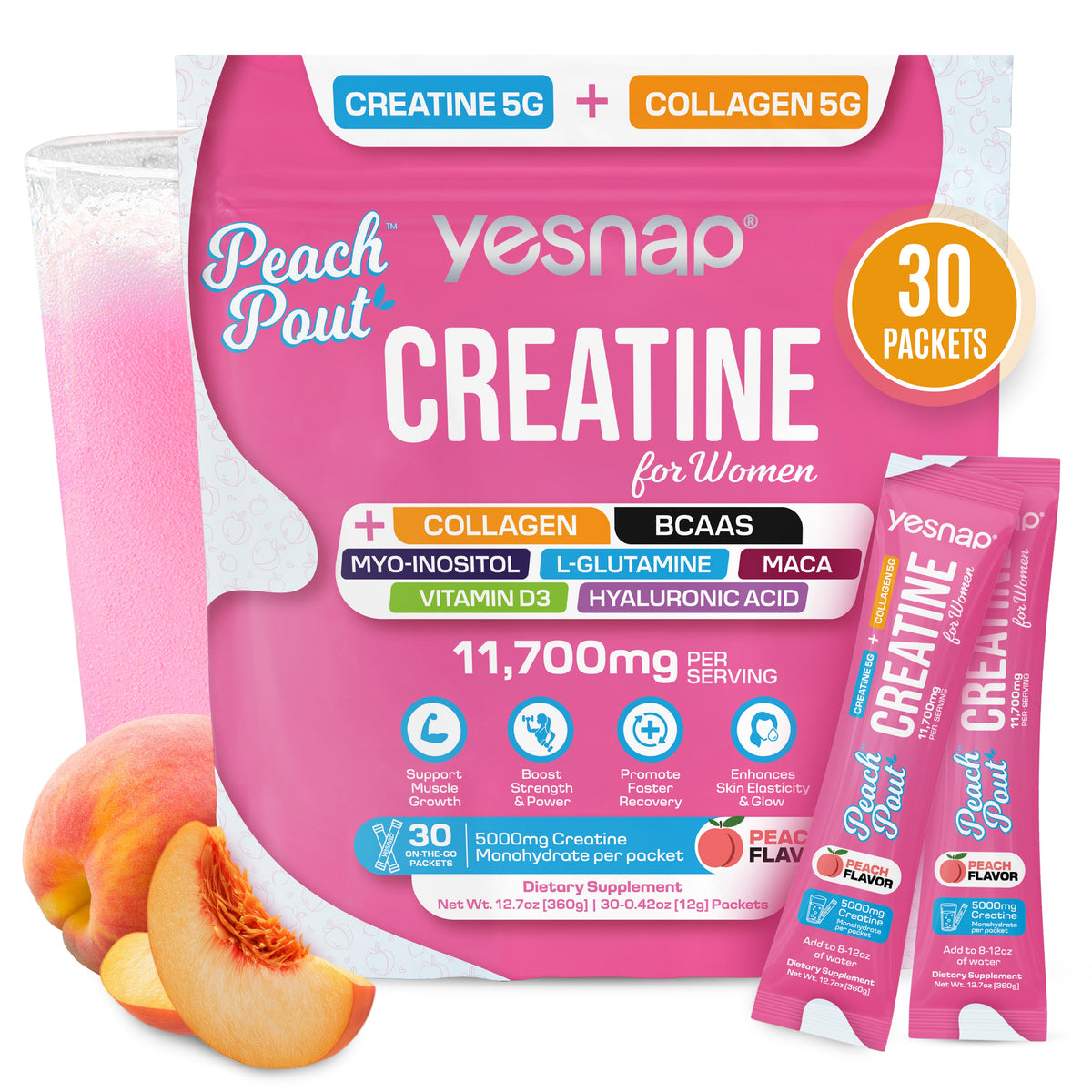
PeachPout™ makes the daily habit easier
YESNAP PeachPout™ is currently presented with 5 g creatine monohydrate plus 5 g collagen per serving, alongside Myo-Inositol, BCAA, maca and hyaluronic acid in a peach-flavored packet. The biggest practical benefit may be simple: one repeatable serving that is easy to attach to a habit you already have.
Explore PeachPout™ Creatine for Women →So when should women take creatine?
The most useful answer is: at the time you will remember it. Research has not established a single magical minute that overrides the value of consistent daily intake. If post-workout is easy, use post-workout. If breakfast is the habit that never disappears, use breakfast. If you train at night and do not want another task at 10 p.m., take it earlier.
Instead of asking “what is the perfect time?”, ask “what cue can I repeat every day?” That cue might be your first water bottle, your smoothie, lunch, or the moment you pack your gym bag.
- Training day: take your regular daily serving around whatever meal or training routine is easiest to repeat.
- Rest day: keep the habit; muscle creatine stores do not care that your calendar says Sunday.
- Hydration: drink to thirst and your individual needs rather than forcing extreme amounts of water.
- Expectations: judge progress by training performance, measurements, photos and how you feel—not one morning’s scale number.
What creatine can—and cannot—do for curves
If your aesthetic goal is stronger glutes or a more athletic shape, the shape comes primarily from muscle development and body composition. Creatine can support the training process, but it cannot choose where your body adds muscle, change skeletal structure, or replace progressive resistance training.
A more realistic “curves” strategy looks like this: train glutes through multiple movement patterns, progressively add load or reps, eat enough protein, sleep enough to recover, and use creatine as one small support layer. Hip thrusts, squats, split squats, hinges and abduction work each challenge the glutes differently; the exact program should match your experience and joint tolerance.
The overlooked half of a strength plan: recovery
Training is the signal. Recovery is where your body has time to respond to it. That does not mean you need to turn sleep into another optimization contest. Start with the fundamentals: a consistent sleep window, enough total sleep opportunity, food that supports your training, and rest days that actually reduce training stress.
Magnesium is involved in normal muscle and nerve function, but sleep research on supplementation is mixed and depends on the population and magnesium form. It is more credible to use a magnesium-based drink as part of a calming nighttime ritual than to promise it will “knock you out.”
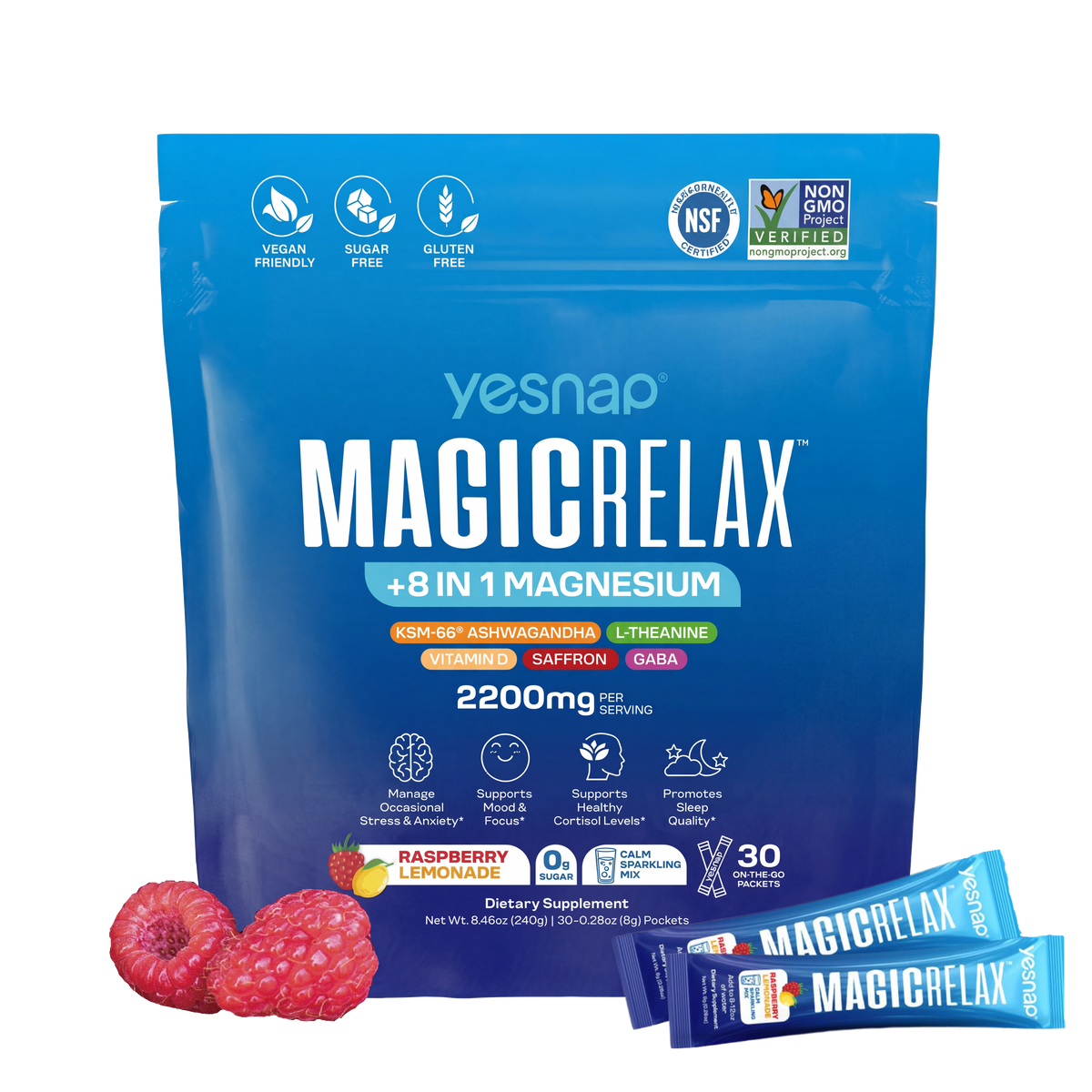
Make the end of the day feel like the end of the day
MagicRelax™ combines a magnesium-focused formula with ingredients including KSM-66® ashwagandha, L-theanine, saffron, GABA and vitamin D3 on the current product page. Pairing a drink like this with dimmer light, lower stimulation and a consistent bedtime can turn supplementation into a behavioral cue for recovery.
Explore MagicRelax™ →A low-friction creatine routine
- Choose one daily cue: breakfast, smoothie, post-workout drink or afternoon water.
- Use creatine consistently on both training and rest days.
- Strength train around movements you can progressively improve.
- Keep protein and total energy intake appropriate for your goal.
- Give the plan weeks and months—not three workouts—before judging it.
- If the scale changes slightly, look at the full picture before assuming fat gain.
FAQ
Will creatine make me look puffy?
Some people see an early increase in body mass because creatine is associated with greater water content inside muscle. That is not the same as subcutaneous “bloating” or fat gain, and individual responses vary.
Do women need a different type of creatine?
Creatine monohydrate remains the most widely studied form. A women-focused formula can add convenience or complementary ingredients, but the core creatine molecule does not need to be “female” to work.
Should I cycle creatine?
Routine cycling is not generally required for creatine to work. If you have a medical condition, take medication, are pregnant or breastfeeding, discuss supplement use with a qualified healthcare professional.
Can beginners take creatine?
Yes, healthy adult beginners commonly use creatine, but the priority is still learning good training technique and building a program you can recover from.
- Systematic review of creatine and exercise performance in active females: PubMed PMID 39861368.
- Creatine + resistance training meta-analysis: PubMed PMID 39519498.
- Female resistance-training study exploring creatine and sleep duration: PubMed PMID 39203908.
Disclaimer: Educational content only; not medical advice. Supplements are not intended to diagnose, treat, cure or prevent disease. Consult a qualified healthcare professional if you have a medical condition, take medication, are pregnant/breastfeeding, or have questions about supplement use.
Train with intention. Supplement with context.
Build your strength routine around the habits that compound: progressive training, adequate nutrition, recovery and consistency.